From January 2016 Niels Deen is leading the research group Multiphase & Reactive Flows at TU/e. As a result of the merger of the two groups (Combustion Technology and Process Technology), the new research group will encompass the entire range from fundamental research through design oriented research in the field of Multiphase and Reactive Flows. Typical applications of this research area are oil and gas extraction, automotive, food and chemical industry, and power plants. Read more>
Author: Christine Geense
Prof. Bert Weckhuysen appointed member of KVAB
Bert Weckhuysen has been invited to join the Royal Flemish Academy of Belgium for Science and the Arts (KVAB). He will formally be welcomed on 12 December at the Public Meeting as a ‘foreign member’ in the Class of Natural Sciences. “It is a great honour, but it is also a bit unreal as a Belgian to be admitted to a Belgian institute as a ‘foreign’ member”, Bert says.
Labtour Eindhoven
This third labtour is organized by the research groups Inorganic Materials Chemistry and Multi-scale modelling of Multiphase Flows of the Eindhoven University, both involved in the MCEC Program. This labtour gives you the opportunity to visit their facilities and to hear more about the MCEC project clusters Syngas conversion.
29 January 2016
Program Labtour Eindhoven (10.00-18.00 pm)
10.00-10.30 Welcome and register
10.30-10.45 Common introduction by Hans Kuipers
10.45-11.30 Talks MCEC research@TU/e by Emiel Hensen, Ivo Filot and Jan Philipp Hofmann
11.30-12.15 Talks MCEC research@TU/e by Hans Kuipers, Johan Padding and Frank Peters
12.15-12.45 Short project pitch by TU/e MCEC PhD’s and PD’s
12.45-14.00 Lunch & Poster viewing
14.00-14.45 Labtour
14.45-15.15 Coffee/tea and change of groups for second round labtour
15.15-16.00 Labtour
16.00-18.00 Drinks (From 16.30 PhD activity organised by Team Community & Communication)
Location
Eindhoven University of Technology
De Zaale, 5612AJ, Eindhoven
Registration
All MCEC members, PhD students and Postdocs are invited to register.
ARC CBBC: National research center for chemical building blocks
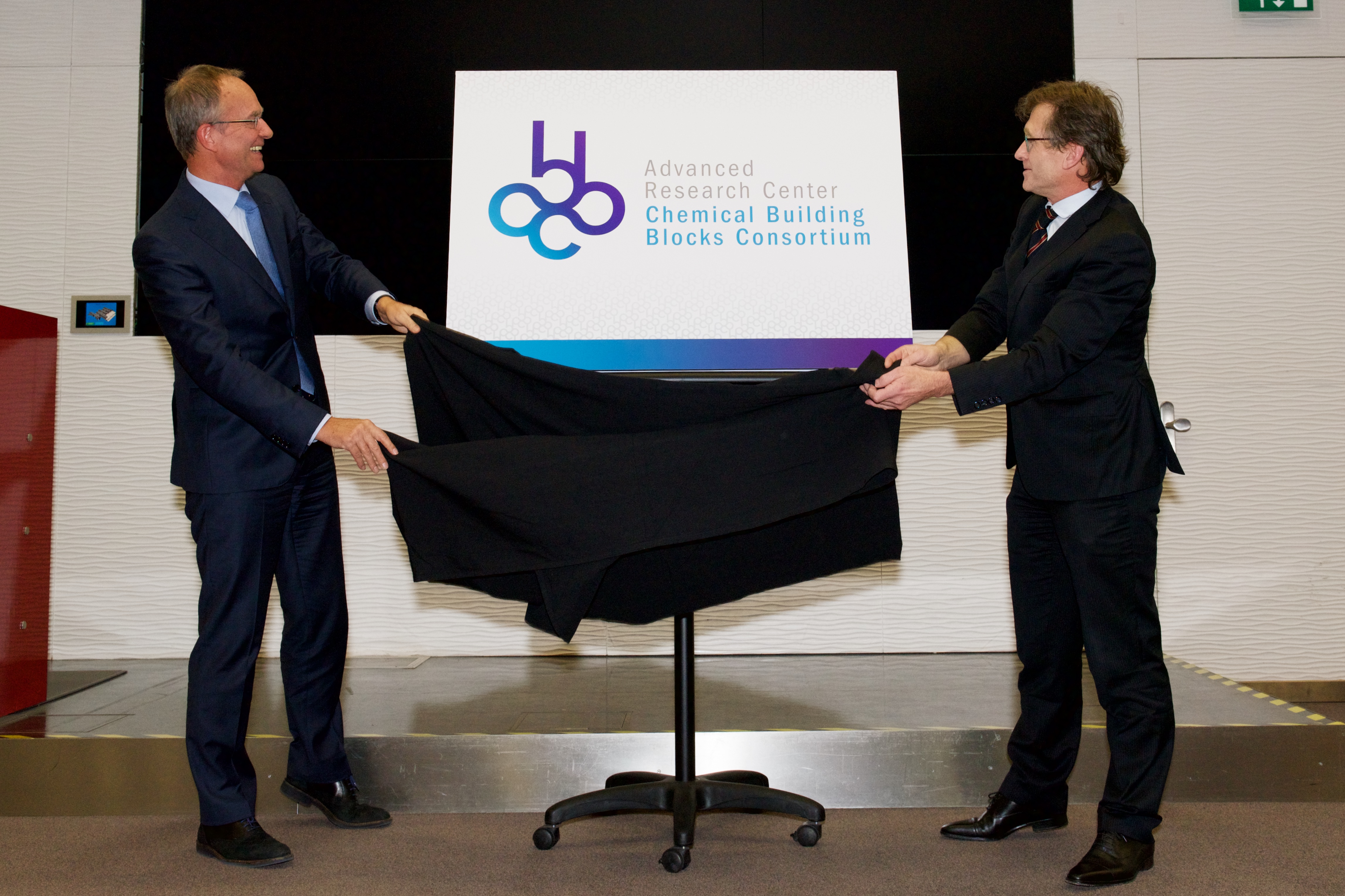
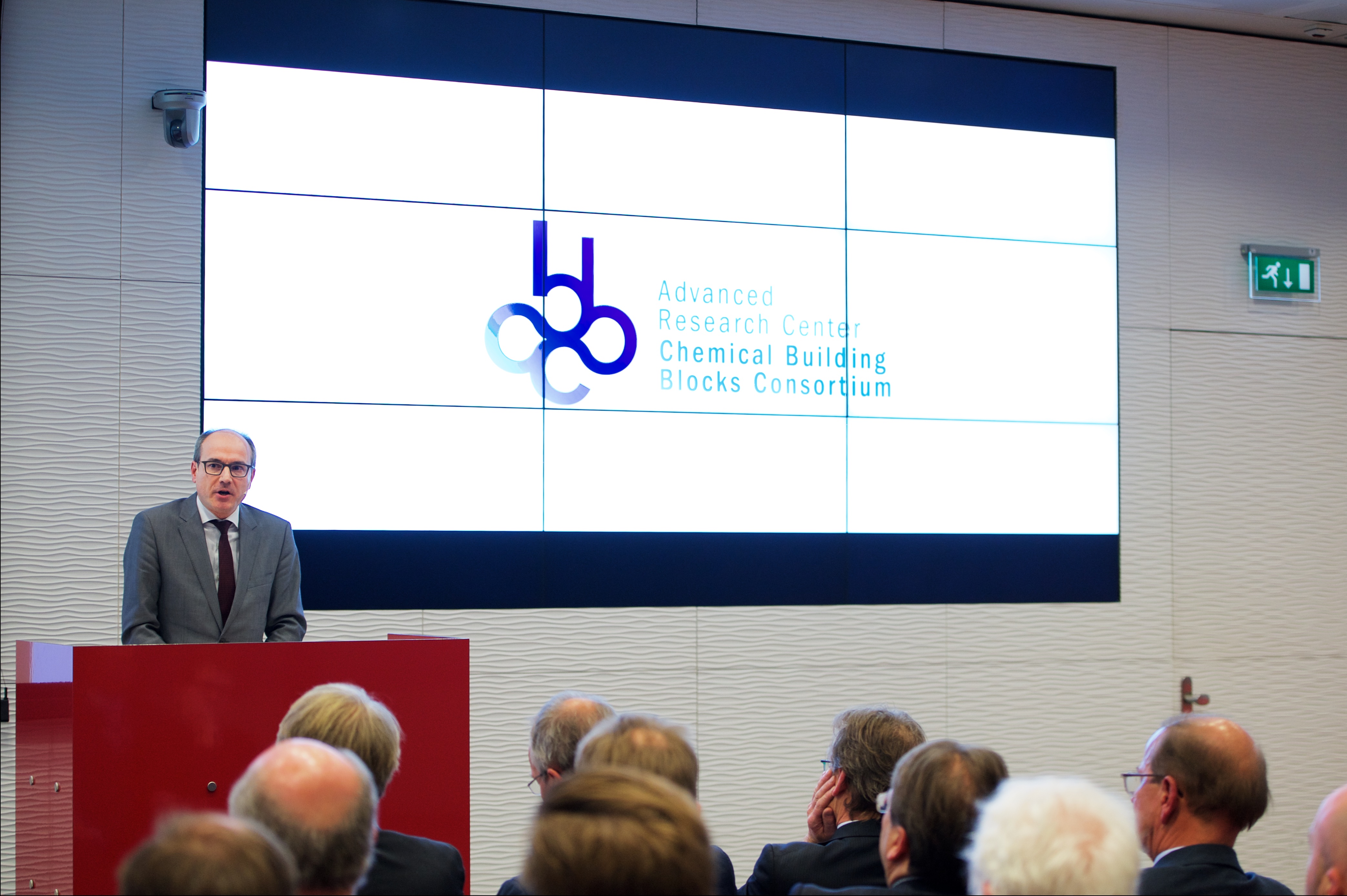
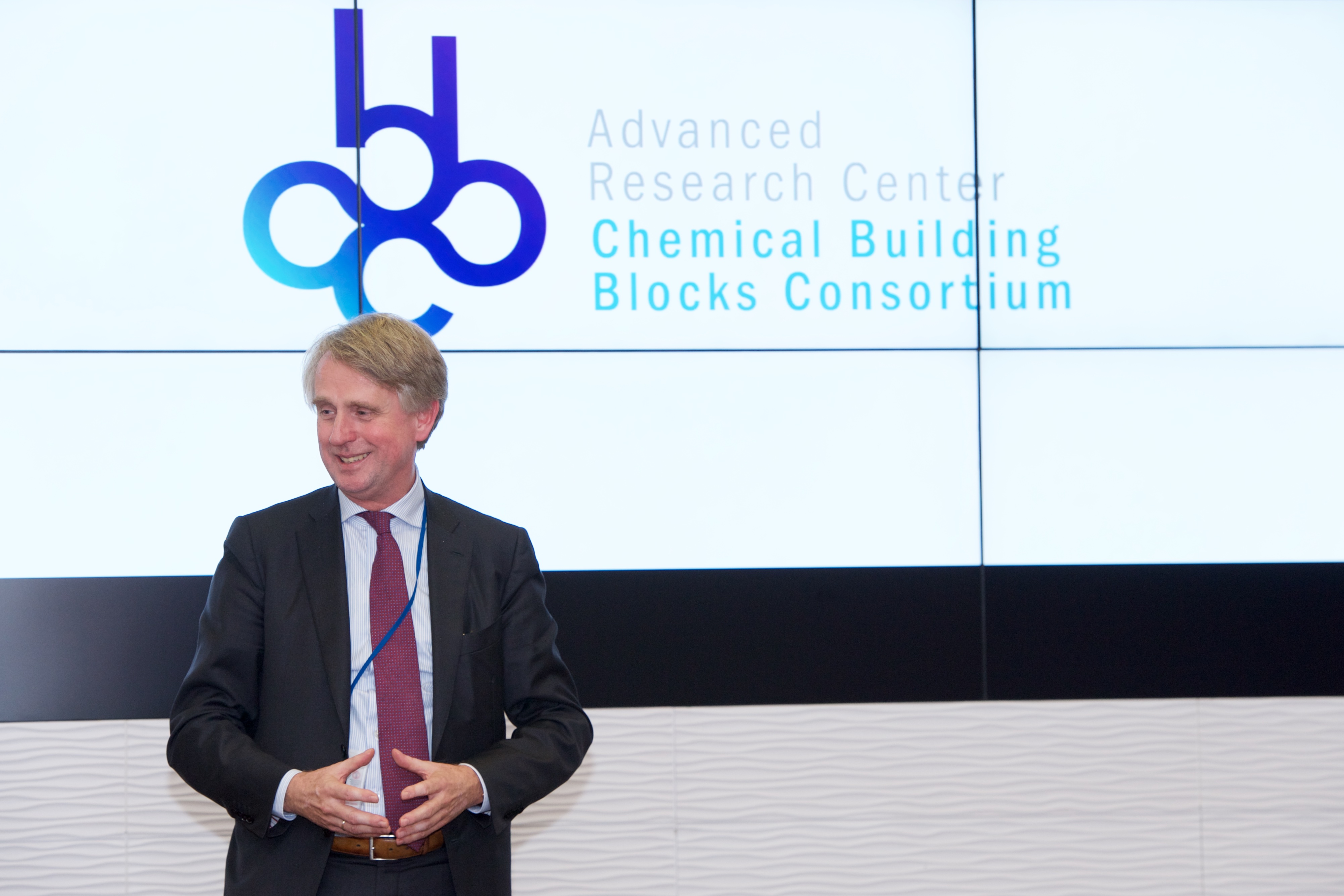
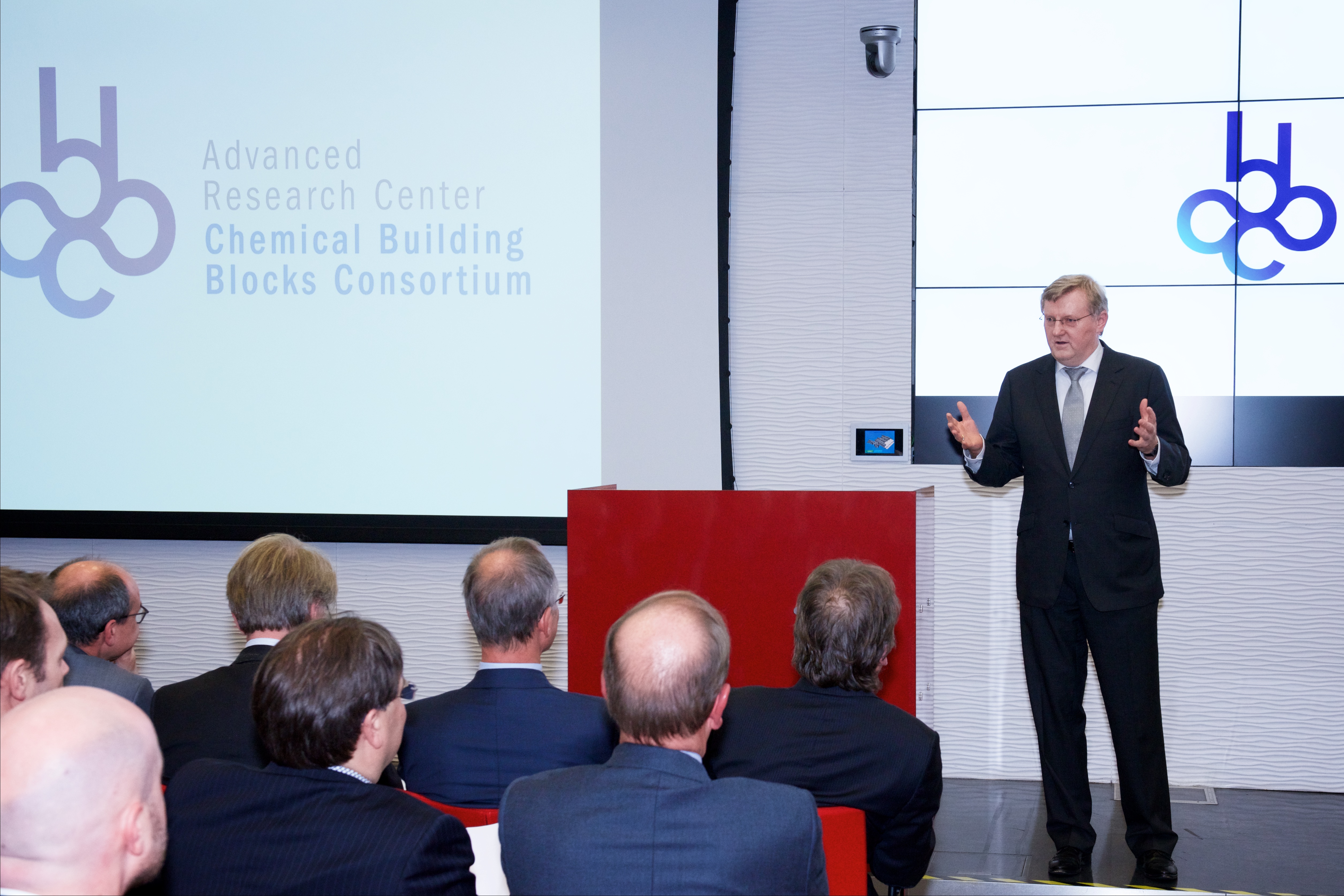
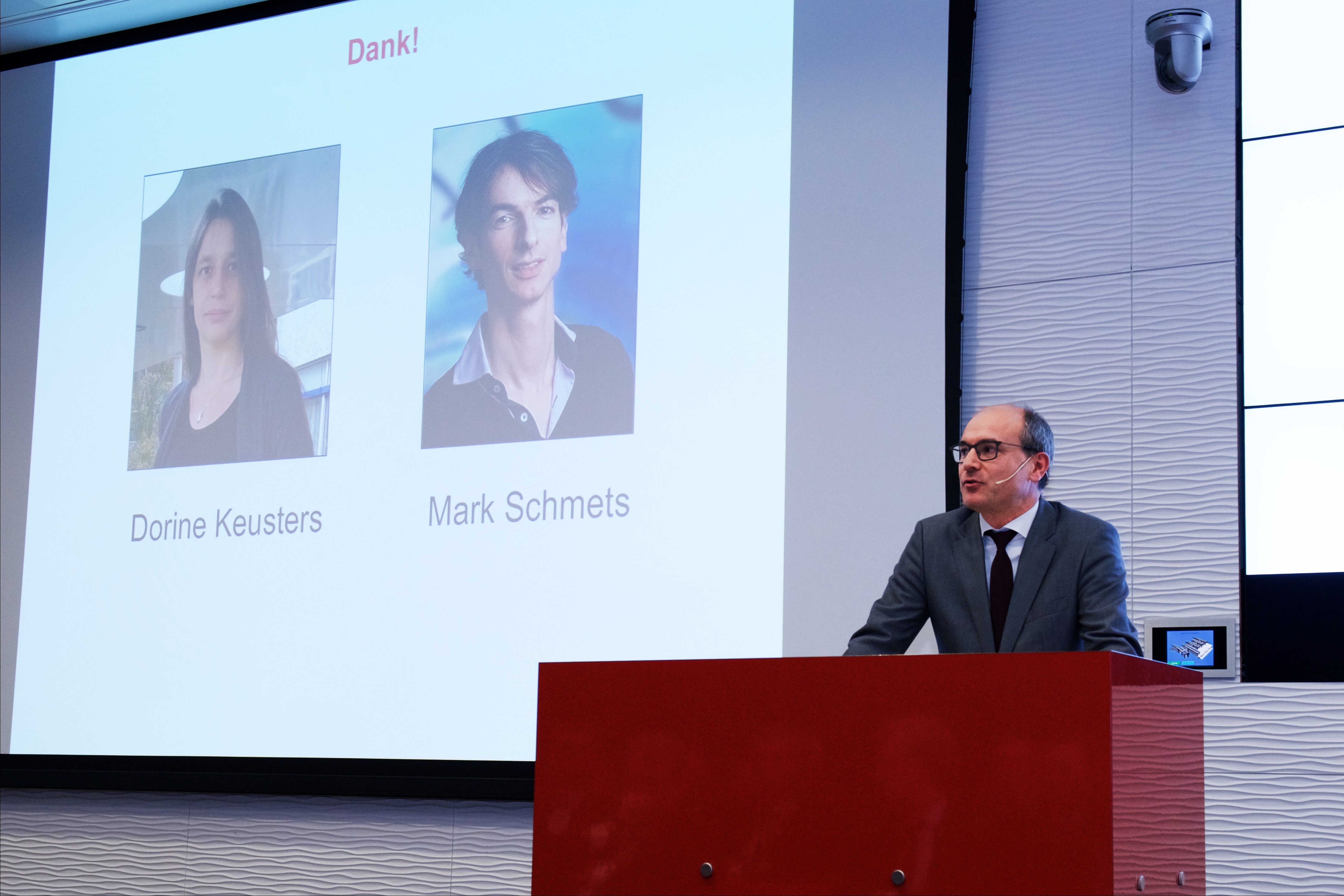
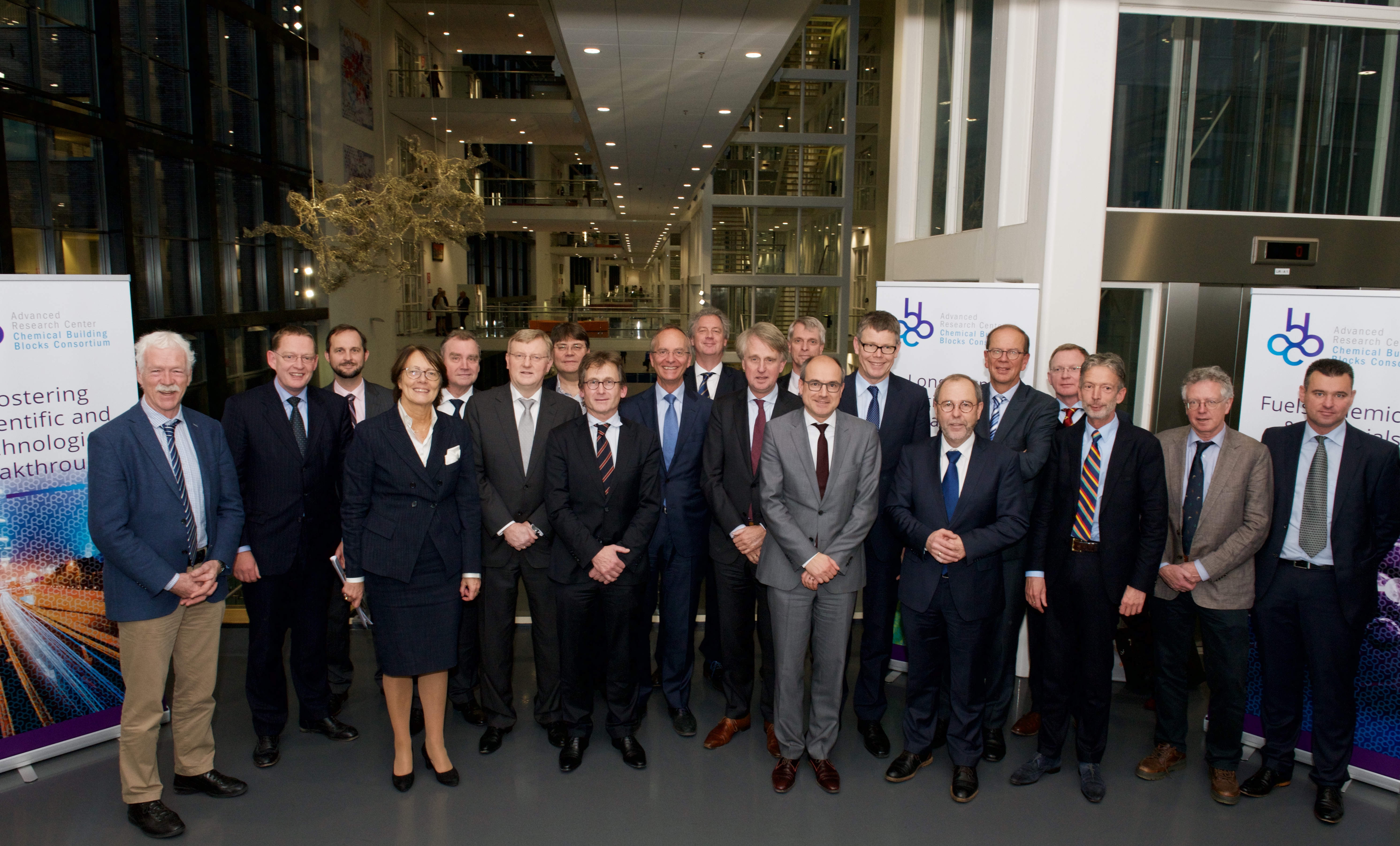
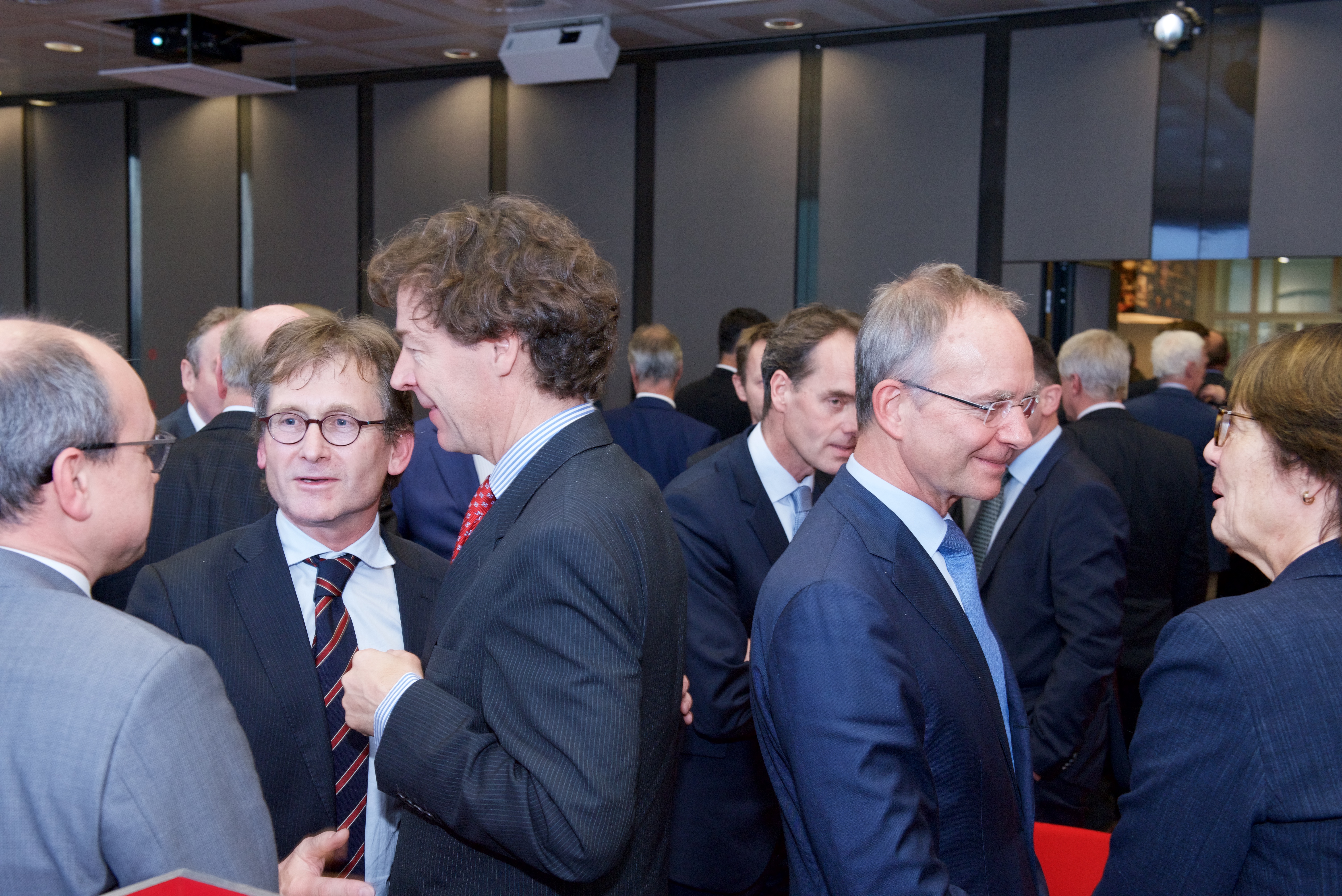
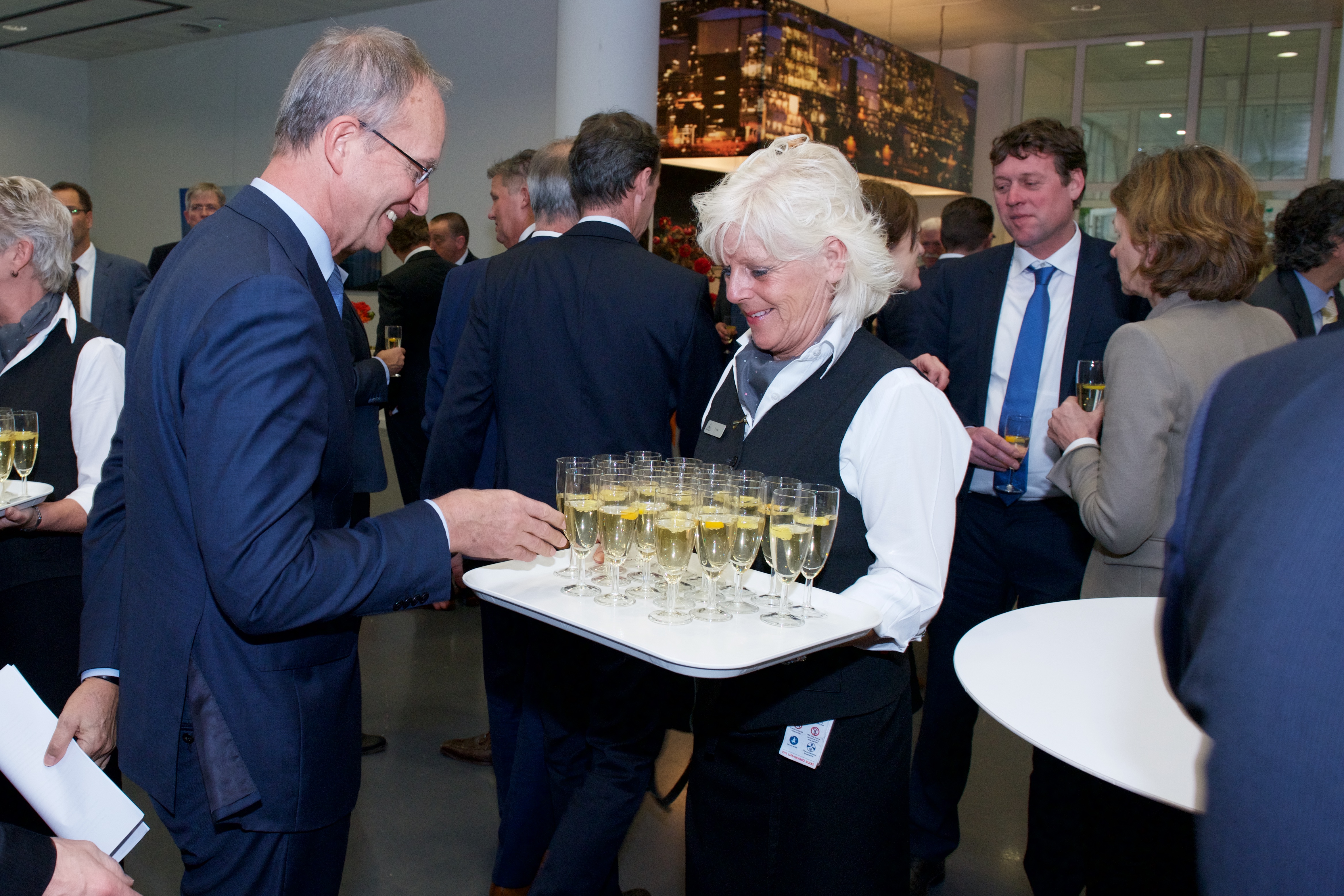
7 December 2015 Minister Henk Kamp announced the kick off of ARC CBBC.
AkzoNobel, BASF, Shell, the Ministry of Economic Affairs, Top Sector Chemistry, the Netherlands Organisation for Scientific Research (NWO) and Utrecht University, the Eindhoven University of Technology and Groningen University presented their plans for setting up the new Advanced Research Center Chemical Building Blocks Consortium (ARC CBBC).
The ARC CBBC is a national research center that continues to build on expertise within the “Gravitation” programs. Bert Weckhuysen, one of the main initiators of this new consortium: “With this initiative we wants to connect the industrial and academic strengths available in the Netherlands to work on global societal challenges in a long term collaboration.” This national research center will tackle important energy and chemistry issues associated with the growing depletion of the finite supply of raw materials.
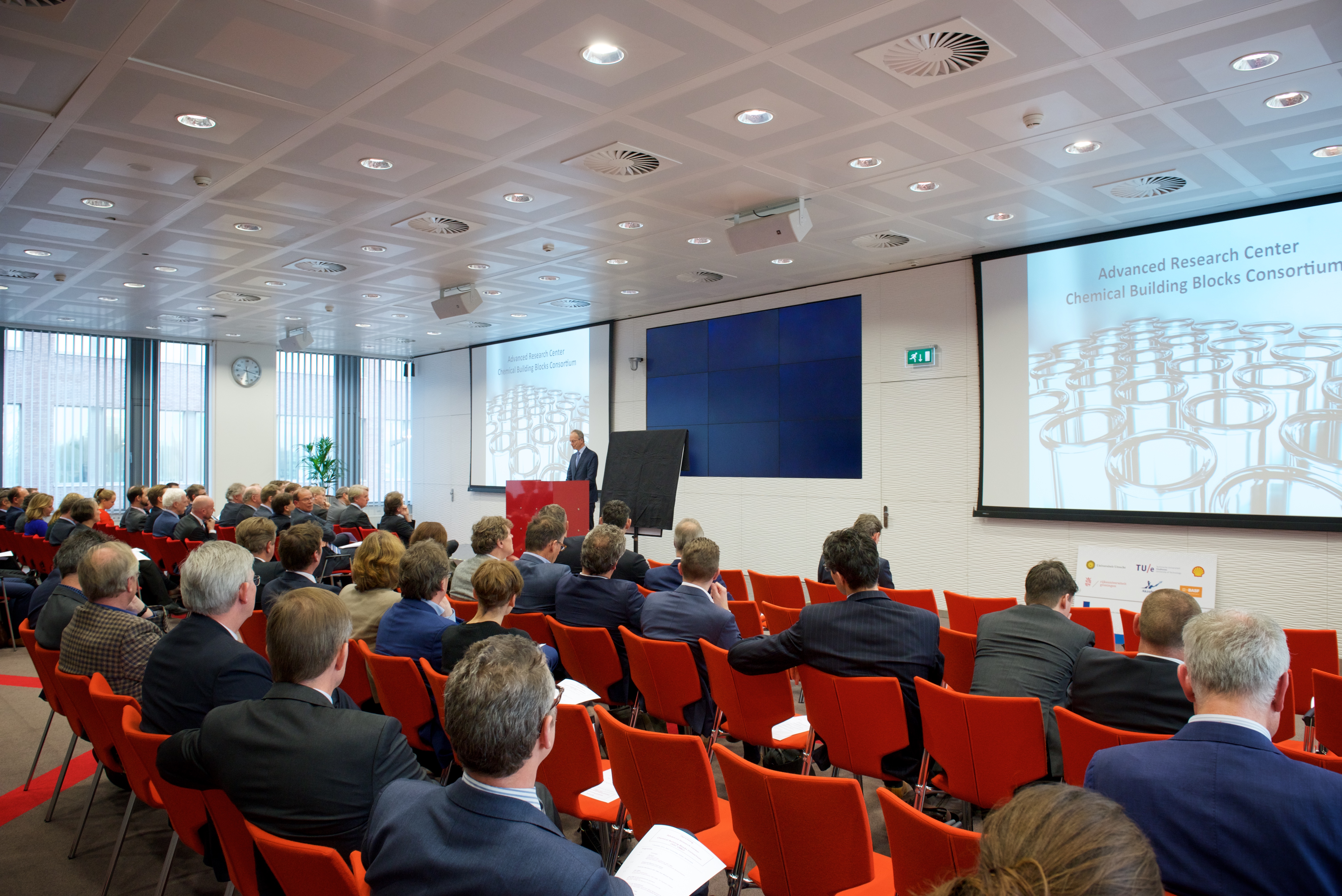
After the opening speech of Minister Henk Kamp, one of the main initiators Prof. Bert Weckhuysen introduced ARC CBBC in a nutshell and showed the introduction movie to give the audience an idea about the importance and uniqueness of this research center. Mr. Marjan Oudeman (President, Utrecht University) talked about the importance of the center from the perspective of the universities involved. Knut Schwalenberg (Managing Director AkzoNobel, The Netherlands) and Drs. Dick Benschop (President-director Shell, The Netherlands) closed the presentations by pointing out the importance of the long term collaboration from the companies’ point of view.


MCEC at CHAINS 2015
MCEC was represented at CHAINS2015 (30 November, 1&2 December) together with the other Dutch Gravitation programs in the field of chemical sciences:
- The Research Center for Functional Molecular Systems (FMS) aims to gain a deeper understanding of the molecular mechanisms, structures, and chemical processes that lead to living systems.
- The Institute for Chemical Immunology (ICI) brings together Chemistry and Immunology in the new field of Chemical Immunology to diagnose and treat diseases related to immune system failure via new, targeted chemical compounds.
The following MCEC members contributed to this event as keynote speaker, chair or speaker at several sessions: Albert van den Berg, Rosa Bulo, Emiel Hensen, Volker Hessel, Petra de Jongh, Evgeny Pidko
The following MCEC posters where presented:

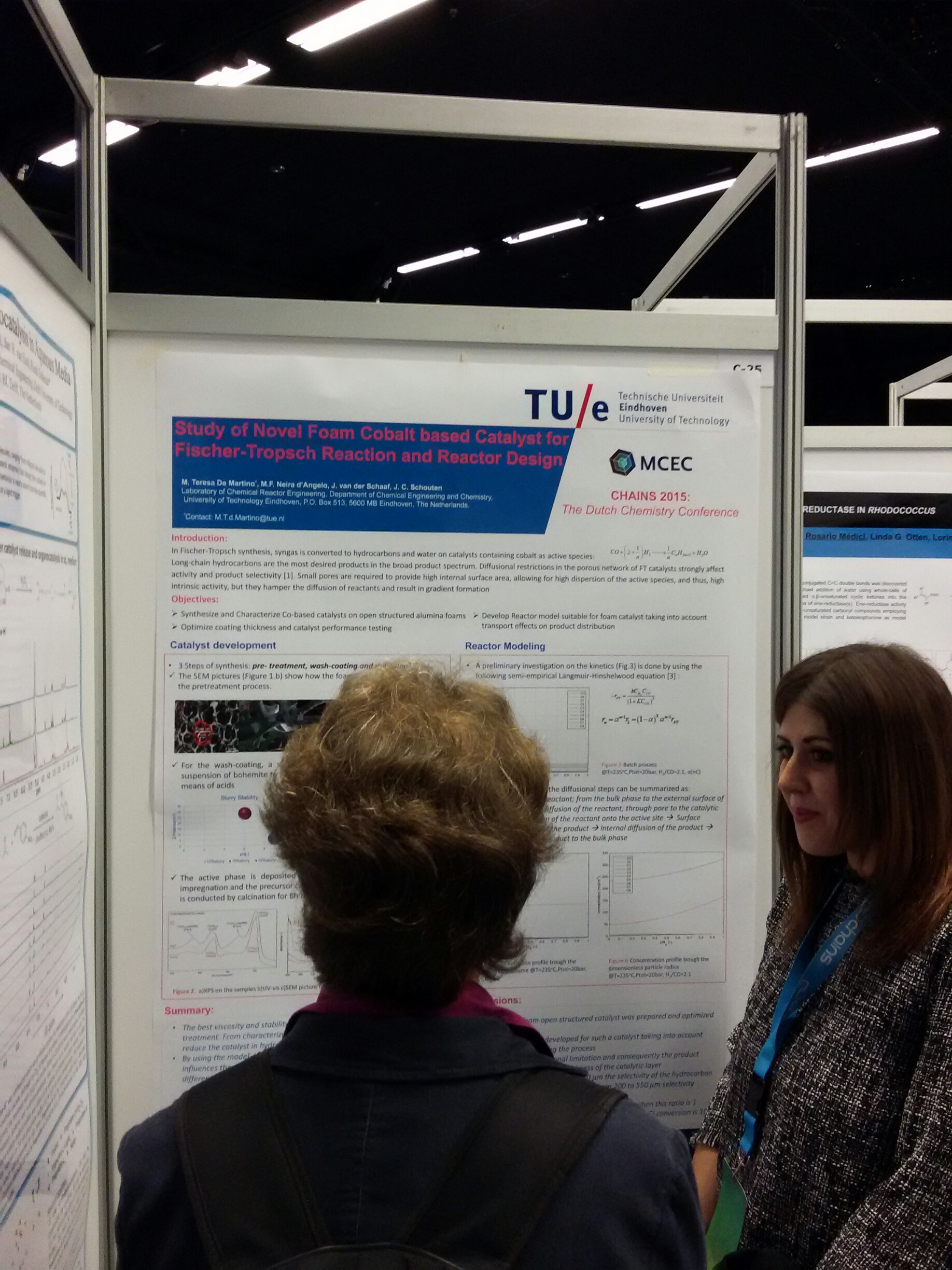
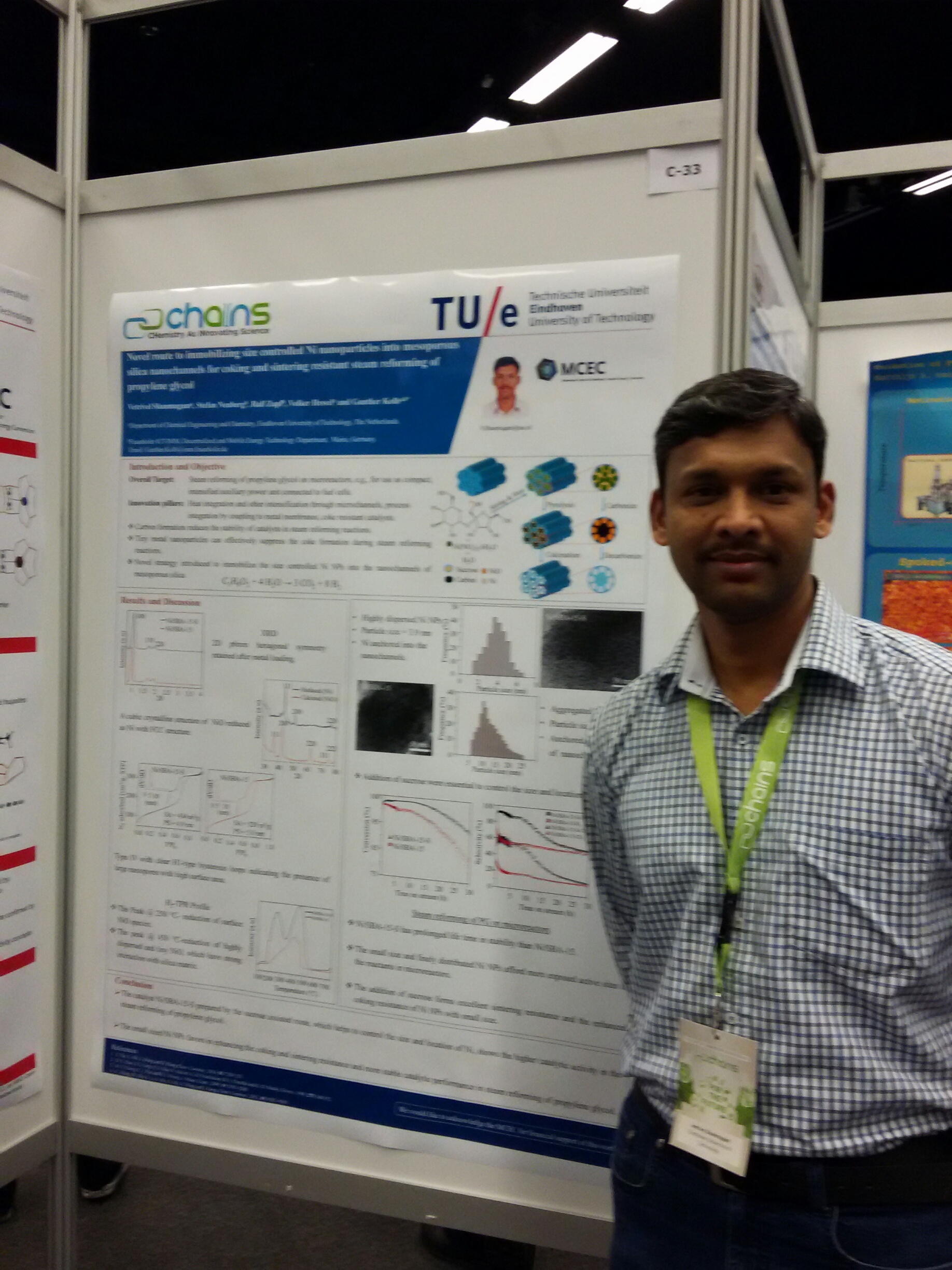
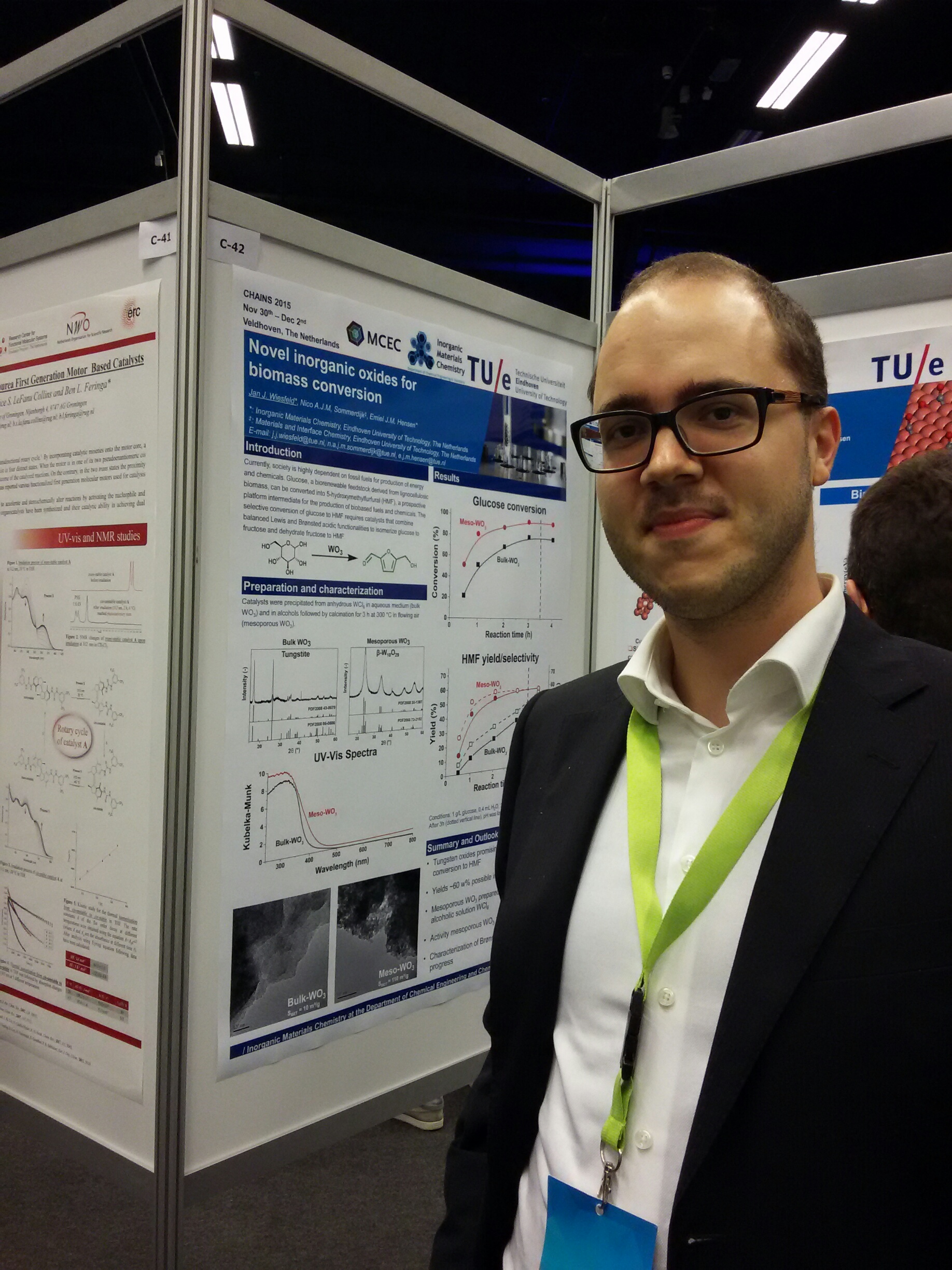
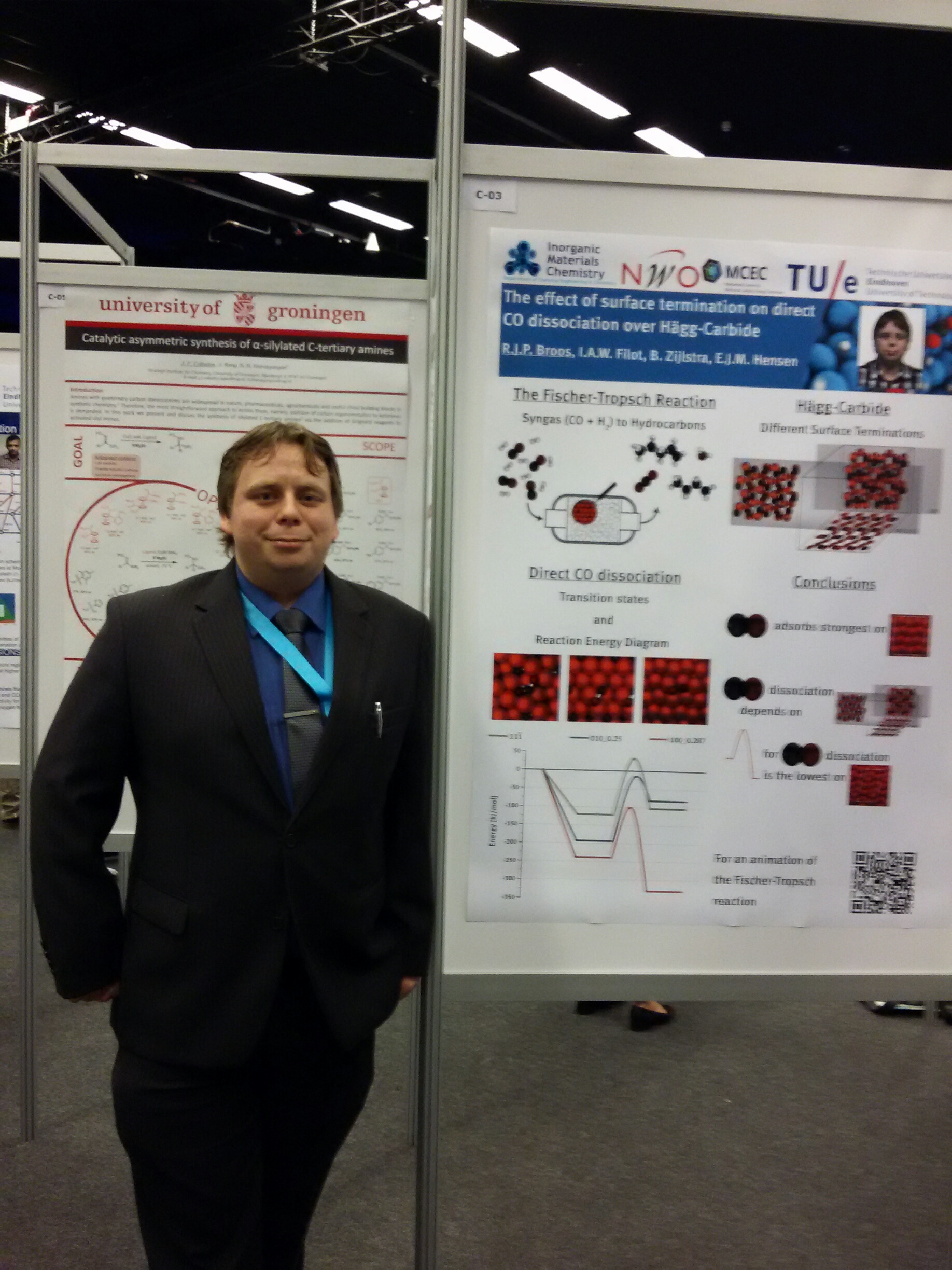
Robin Broos (TU/e) “The effect of surface termination on direct CO dissociation over Hagg carbide”
Robin Geitenbeek (UU) “The effect of silica overgrowth on the temperature dependent luminescence of NaYF4:Yb3+/Er3+”
Teresa de Martino (TU/e) “Study of Novel Foam Cobalt based catalyst for Fischer-Tropsch reaction and reactor modeling”
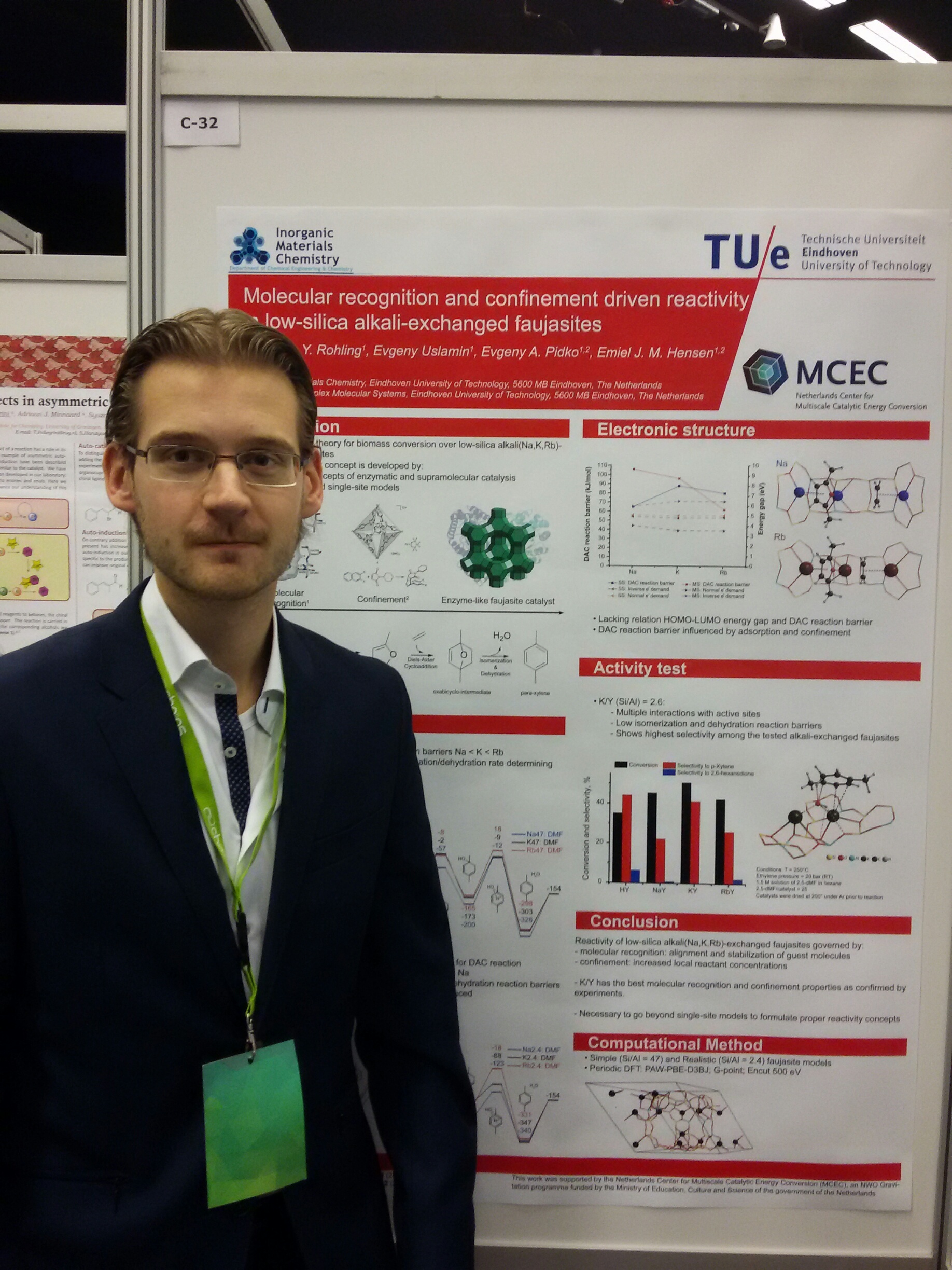
Roderigh Rohling (TU/e) “Enzyme mimicking confinement-driven reactivity of zeolite catalysts in the Diels Alder Cycloaddition and dehydration reaction for biomass valorization”
Vetrivel Shanmugam (TU/e) “Novel route to immobilizing Ni nanoparticles into mesoporous silica with size, location control and sintering resistant reforming of poly alcohol”
Jan Wiesfeld (TU/e) “Synthesis of novel solid acid catalysts for biomass conversion”
Pieter Bruijnincx joins De Jonge Akademie
Pieter Bruijnincx has been asked to join The Young Academy (De Jonge Akademie), an independent KNAW platform of top young scientists with outspoken views about science and scholarship and the related policy. Pieter: “I am looking forward to contributing policy recommendations and to increase awareness of science in society.”
The Young Academy has 50 members of top scientists from all scientific disciplines, appointed for five-year terms. Within the Academy, the researchers focus on one or more themes: interdisciplinarity within science, science policy,
science and society and internationalisation.
MCEC School 2015
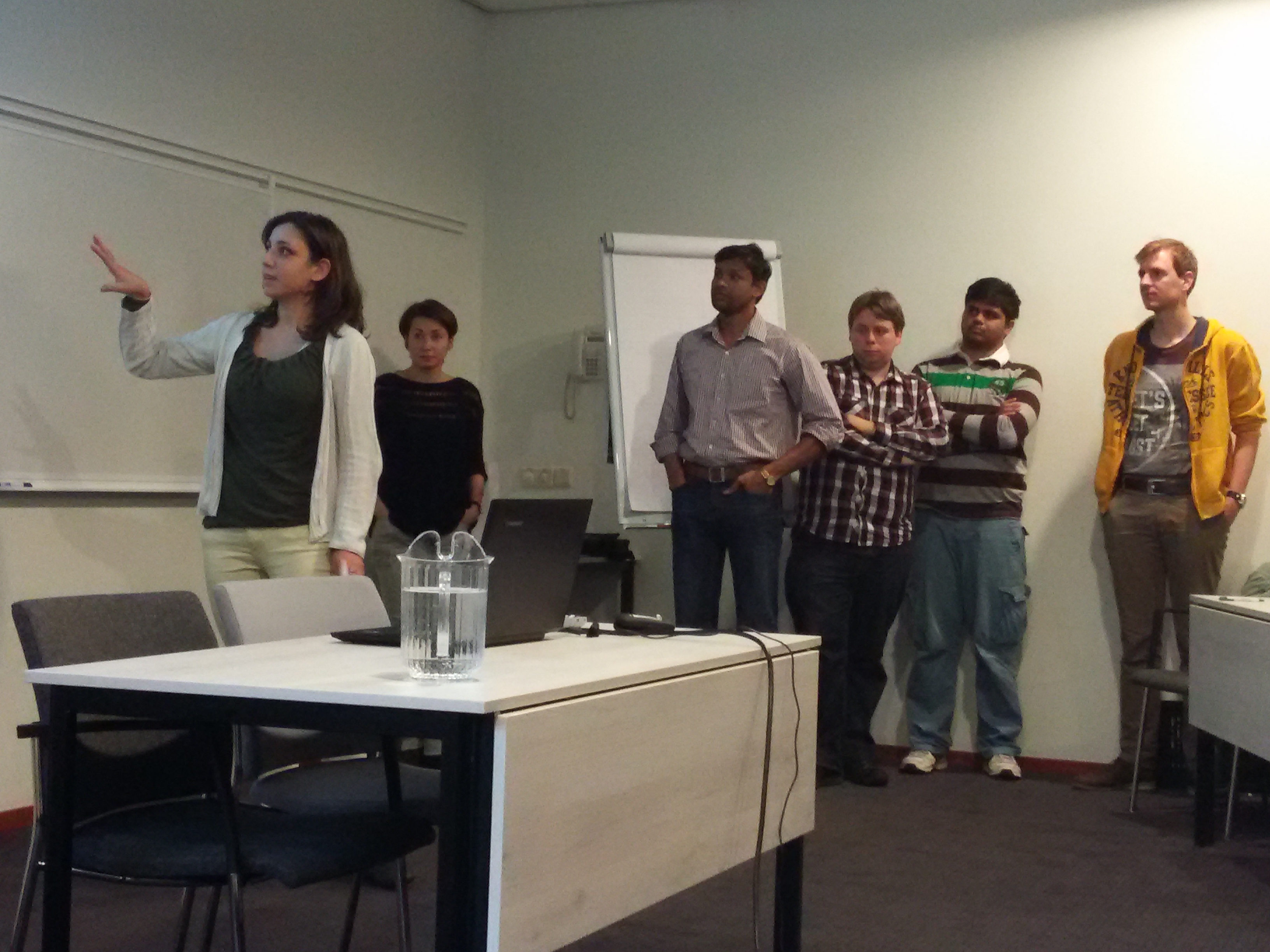
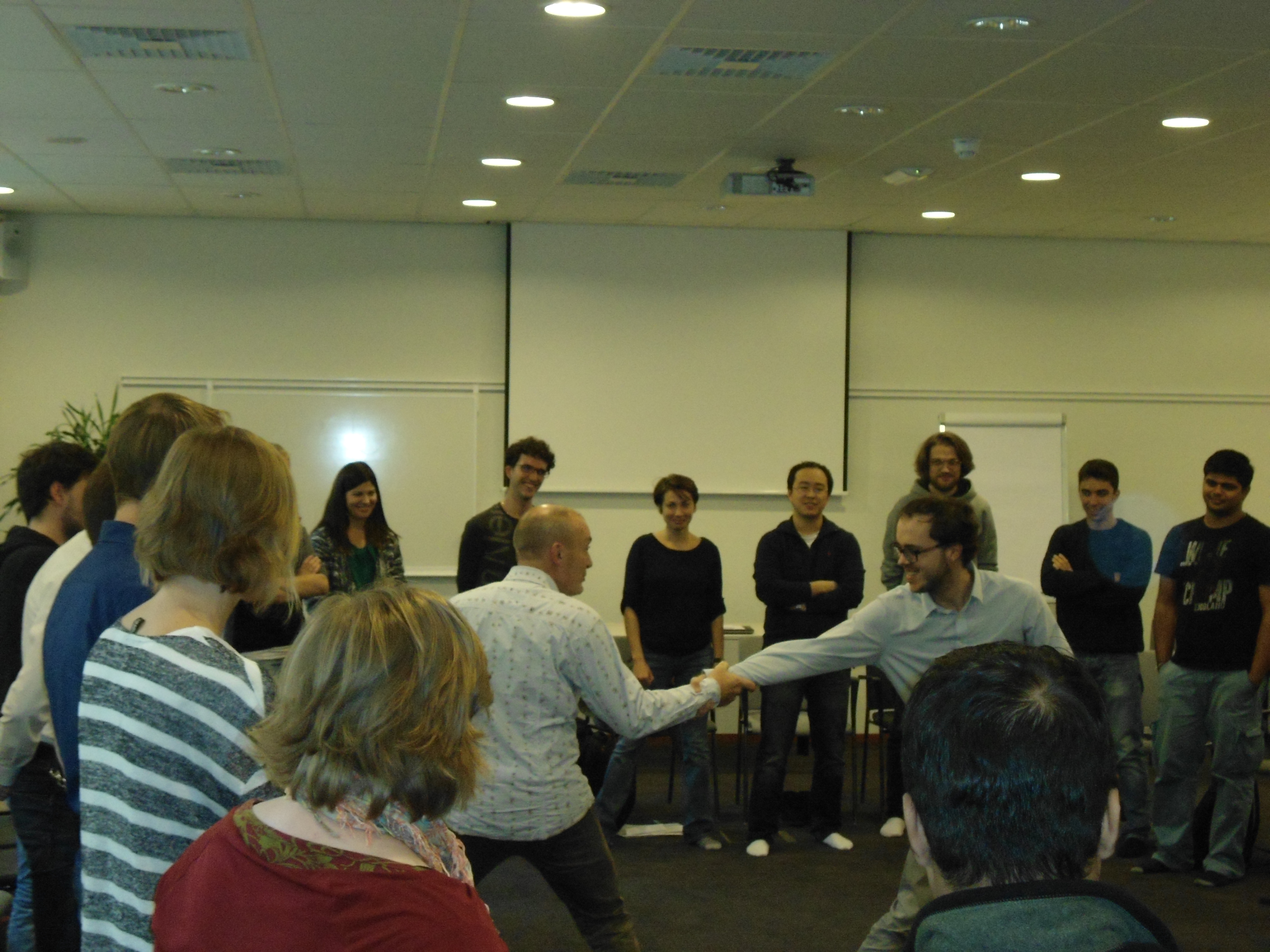
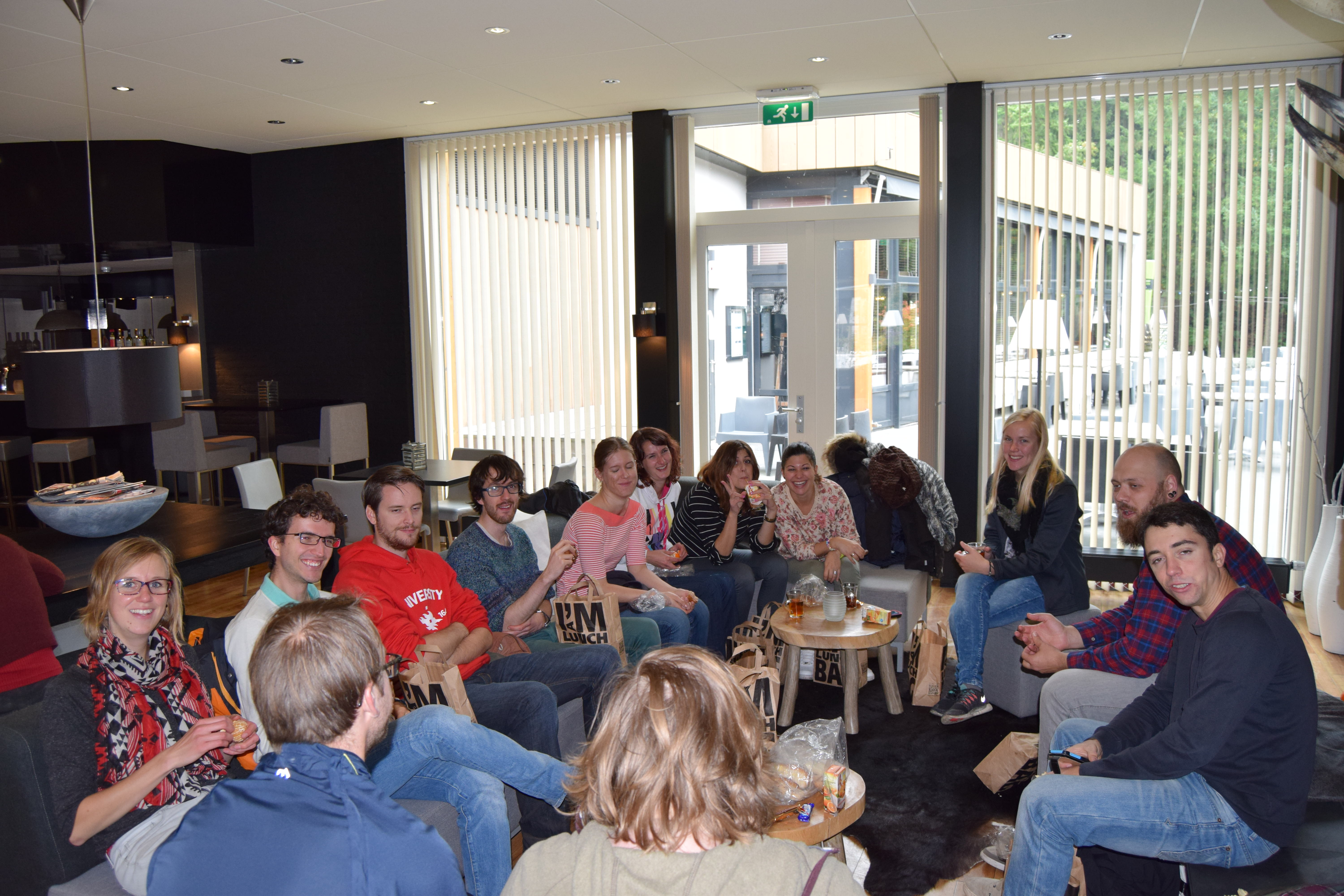
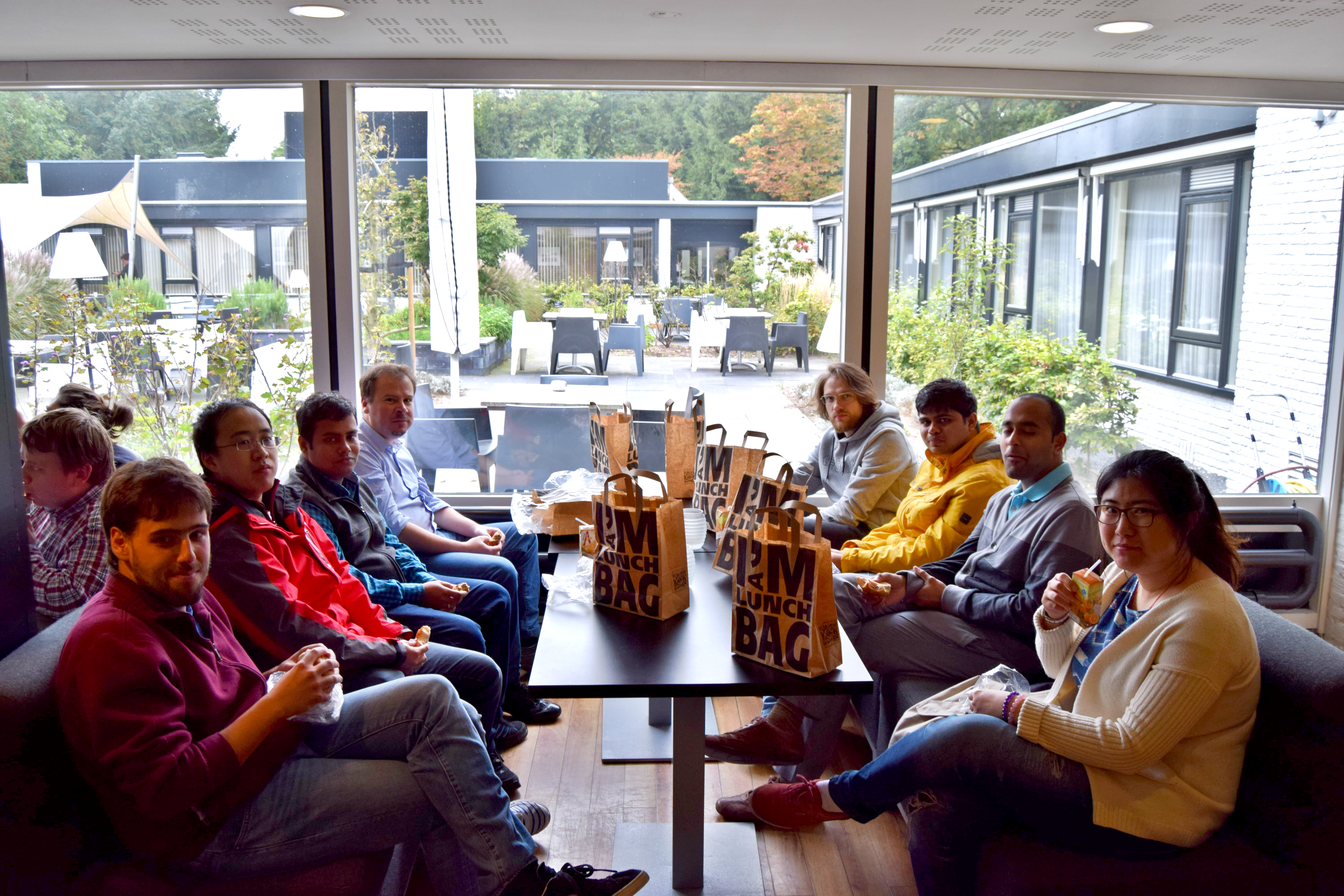
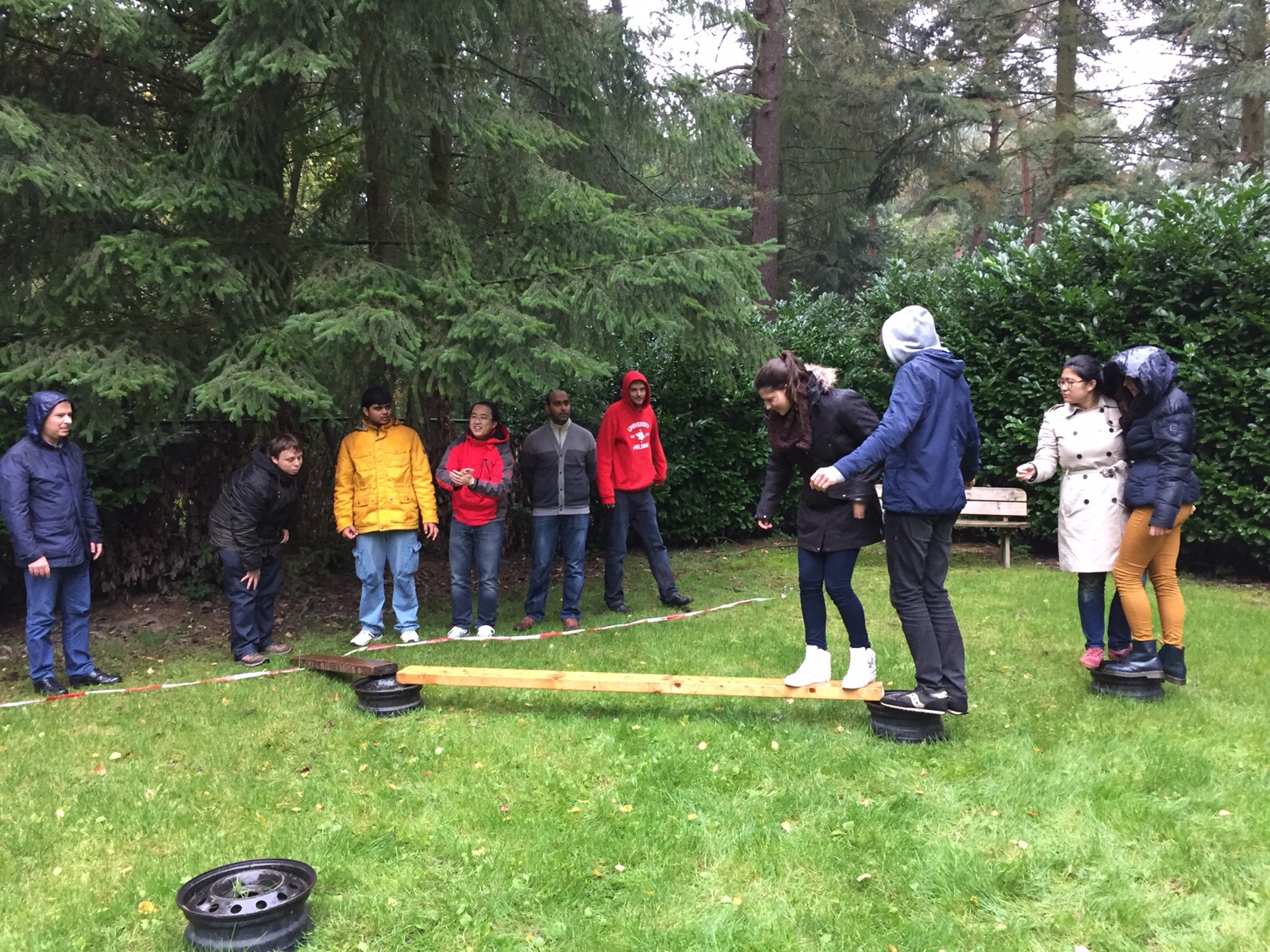
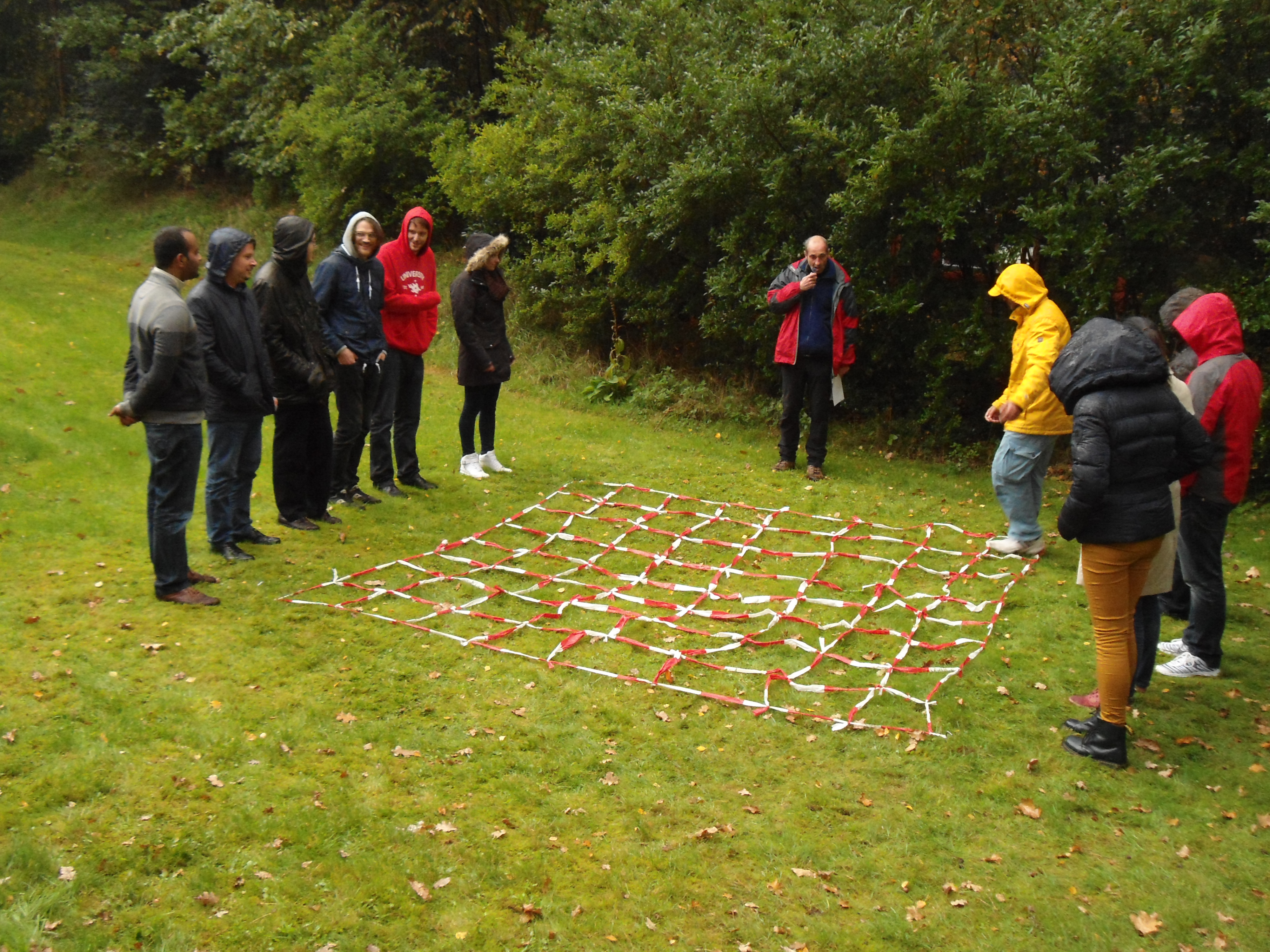
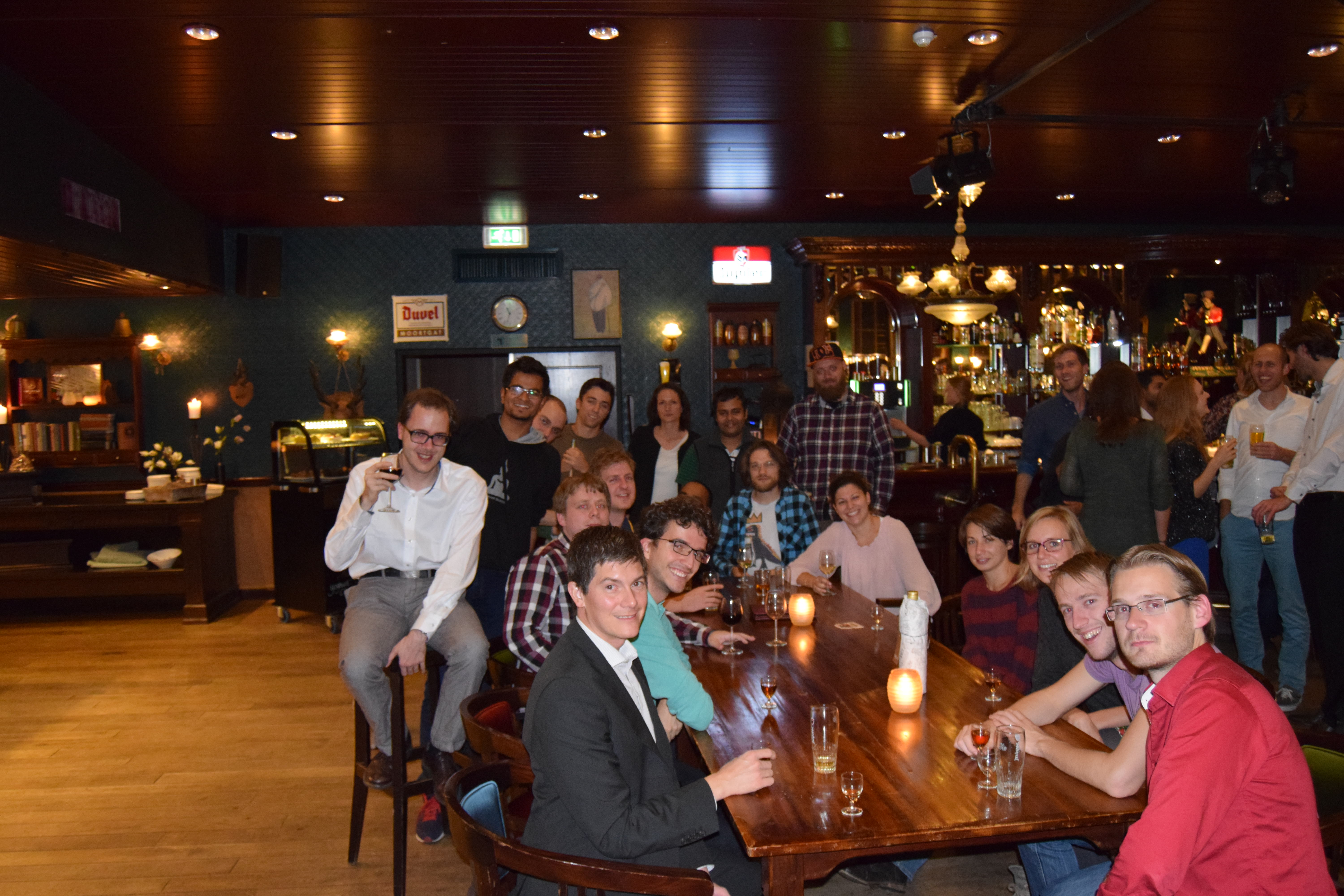
The first MCEC School was a great success thanks to all the participating PhD students, postdocs and staff members.
The five days program was composed of several lectures of different disciplines that are brought together in the MCEC Program. The lectures where provided by Hans Kuipers, Bert Weckhuysen, Rutger van Santen, Albert van den Berg, Marjolein Dijkstra, Alfons van Blaaderen, Detlef Lohse, Niels Deen, Pieter Bruijnincx, Monica Barroso, Krijn de Jong and Emiel Hensen. It was our pleasure to be able to invite guest lecturers Ruud van Ommen (Delft University of Technology) and Thomas Jaramillo (Stanford University).
During the week the participants were also able to learn each other better by several outdoor activities and the case studies that they presented on the last day with guidance of Rosa Bulo, Johan Padding and Rob Lammertink.

Prof. Krijn de Jong member of the Academia Europaea
14-10-2015
The Council of the Academy invited Krijn de Jong to become a member of the Academia Europaea. The election to become a member is an honor that recognizes his international scholarship.
The Academy of Europe was founded in 1988 and consists of eminent individual scholars form the continent of Europe. The members cover the full range of academic disciplines that comprises the humanities, social, physical and life sciences as well as mathematics, engineering and medicine; currently there are 3200 members.
This broad assembly of excellence and the pan-European distribution of the members make the Academia unique among other European Academies.
Strategic meeting 2015
Each year MCEC organizes a Strategic Meeting for its members. MCEC members who are involved in one or more MCEC projects as a project leader and/or supervisor, are invited and welcome to register for this event.
The members of the MCEC Scientific Advisory Board are also invited.
30 November 2015
Minister Bussemaker bezoekt MCEC en de Utrechtse zwaartekrachtprogramma’s
Jonge Utrechtse wetenschappers vertelden afgelopen maandag (31 augustus) persoonlijk aan minister Jet Bussemaker van Onderwijs, Cultuur en Wetenschap over hun werk binnen de Zwaartekrachtprogramma’s.
bezoek minister Bussemaker UU 31 aug 2015
Fotografie Jeannette Schols
Minister Bussemaker en rector Bert van der Zwaan (Universiteit Utrecht) kregen een rondleiding door de anorganische chemie-laboratoria van het Netherlands Center for Multiscale Catalytic Energy Conversion (MCEC). In deze laboratoria werken onderzoekers aan heterogene katalyse.
Hier wordt onderzoek gedaan op verschillende schalen, van meters tot nanometers. De minister kreeg bijvoorbeeld de mogelijkheid om met een fluorescentiemicroscoop te kijken naar katalysatordeeltjes, die enkele nanometers groot zijn. Een aantal jonge onderzoekers binnen het MCEC-programma presenteerde hun onderzoek aan de minister.
Bert Weckhuysen over Zwaartekracht: “De Zwaartekrachtprogramma’s katalyseren multidisciplinair onderzoek. Behalve doorbraakonderzoek richten we ons ook op outreach, valorisatie en het opleiden van jonge onderzoekers. We zien het als onze plicht om een nieuwe generatie topwetenschappers op te leiden. Meer specifiek, MCEC richt zich op energietransitie: het ontwikkelen en verbeteren van nieuwe vormen van energie: duurzaam, milieubewust en minder afhankelijk van fossiele brandstof. Behalve nieuwe brandstof is er ook winst te behalen in het gebruik van fossiele branstoffen. We doen onderzoek naar activiteit, selectiviteit en stabiliteit van katalysatoren. De vakgebieden fysica, chemie en materiaalengineering zijn hierbij betrokken.”
Minister Bussemaker: “Het is goed om te horen dat hier zoveel wordt samengewerkt, zowel binnen de Universiteit Utrecht als met andere universiteiten. Het doet me goed om te horen dat er veel aandacht wordt besteed aan jonge onderzoekers en vrouwelijke onderzoekers. Ik vind het belangrijk dat de focus niet alleen gelegd wordt op het ophalen van kennis, zoals dit jaar met de Nationale Wetenschapsagenda, maar ook het delen ervan.”
Zwaartekrachtprogramma’s
De Zwaartekrachtprogramma’s zijn samenwerkingsverbanden tussen toponderzoekers in Nederland, gericht op breed, multidisciplinair onderzoek. De Universiteit Utrecht is penvoerder van vier Zwaartekrachtprogramma’s: Netherlands Center for Multiscale Catalytic Energy Conversion, Netherlands Earth System Science Centre, Cancer Genomics Centre Netherlands en Consortium on Individual Development.