MCEC PhDs learn how to impress with their poster


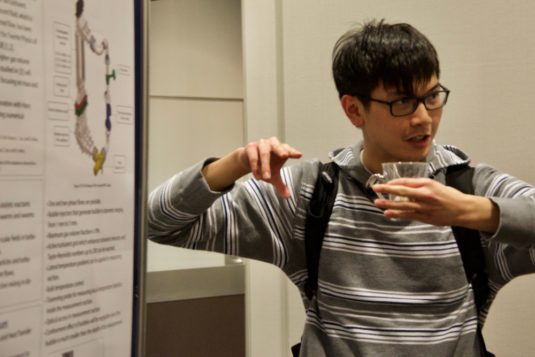
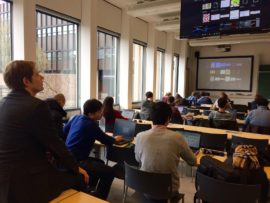
Last Friday 17 February, Ivo Filot gave PhDs a lot of insights as how to work with Photoshop and InDesign during his workshop ‘Impress with your poster’.  Apart from our own MCEC PhDs, the workshop was also attended by students from related research groups from Utrecht University as well as Eindhoven University of Technology and Twente University.

“I’d never used Indesign before, I make my posters in Powerpoint. Or rather I’d used to, because I’ll continue using InDesign. The basic training by Ivo and the chance to mess around a bit with the program, helped me a lot. With his knowledge I can improve the poster I’ve prepared for the MCEC Annual Meeting. I also liked that this time, the feedback on my poster was solely on the design.”
– Jeroen Vollenbroek, participant

Often scientists are required to make posters to present their scientific work. For many years, Powerpoint and Publisher (both from Microsoft) were the dominant tools employed in academia for the design of these posters. Alternatively, InDesign in conjunction with Illustrator and/or Photoshop can be used for the creation of high-quality posters and is considered among the people working in graphical design, typography or publishing to be the de-facto standard in desktop publishing software.

The usage of InDesign can be daunting at first due to the large set of options and settings to configure and this is mainly the reason why a lot of people prefer the much simpler Powerpoint or Publisher. As such, the trainer Dr. Ivo Filot focused on the usage of InDesign. In this workshop, he explained:

  • how to construct a template for making posters;
  • how to organize your graphical content and set-up a project in InDesign;
  • how to effectively make graphical material;
  • how InDesign can be used in conjunction with Photoshop and Illustrator;
  • what the good and bad approaches are in poster design.

Vera Smulders: “I have some self-taught experience with InDesign and Illustrator. But I’d never had a course before, so this was very useful. I’ve learned some new things, like how to combine multiple forms into one and how to use certain features, to name a few. This training had a good balance between theory and practice, and the round of feedback was very valuable, I can get to work now. I used to be not the best of friends with Illustrator, but that might change after all.”

The announcement of the workshop was met with such enthousiasm that MCEC Office had to close the registration early and dissapoint several interested PhDs. A new workshop is being considered. Please check this website (Page: Events) regularly for more information and our calender.

February 20, 2017
Mathieu Odijk speaks at Teacher’s Day at Utrecht University


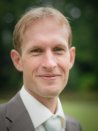
Last 15 February, the Faculty of Science organized an in-service training day for around fifty (future) science teachers called ‘Grenzen aan de Chemie’. Mathieu Odijk, as invited speaker, held a lecture on ‘An introduction to Lab on Chip, principles and applications’.

Lab on Chip was born out of a melting pot of sensor development, integrated circuit design, and biotechnology. The new possibilities in the field of micro- and nanofabrication provide the ability to perform certain functions in the (bio) chemical laboratory on a much smaller scale.

Odijk’s lecture explained the benefits of a Lab on Chip with the use of several practical examples. These advantages include the possibility of point-of-care self-tests, flow chemistry for the screening of new drugs, and the analysis of individual cells with unprecedented throughput.

February 17, 2017

MCEC meets for Midterm Evaluation


From Sunday 22 January till Tuesday 24 January 2017, the boards, members and the community of MCEC met to discuss the upcoming Midterm Evaluation. 

On Sunday, the Scientific Advisory Board met with the Supervisory Board and MCEC’s tenure track Assistant Professors Ivo Filot, Mathieu Odijk and Freddy Rabouw. Afterwards, the Supervisory Board (SB) had an informal talk with our PhDs Renée Ripken, Stijn Hinterding, Roderigh Rohling, Alvaro Moreno Soto, Anne-Eva Nieuwelink and Aditya Sengar (the last two also being student representatives).

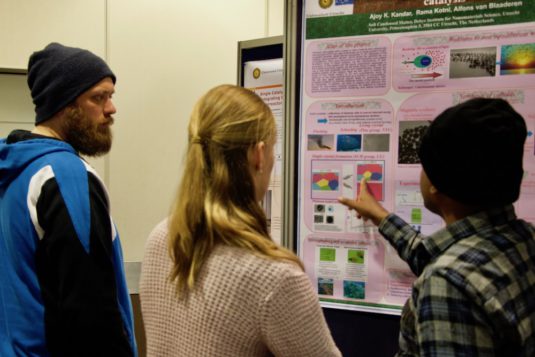
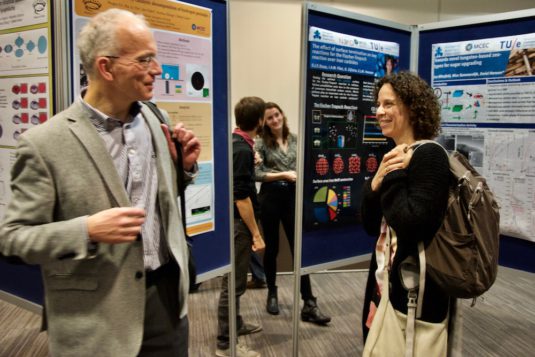
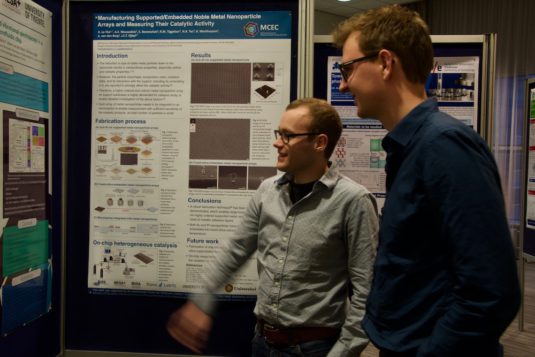
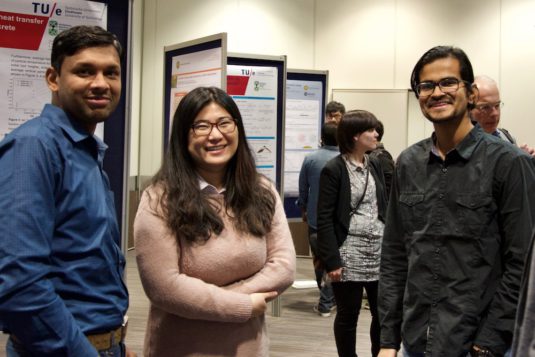
Scientific presentations by members of the Management Team and MCEC PhDs were held on Monday, as well as discussion rounds on MCEC topics Mastering catalytic events, Complex multiscale structures and Mass & heat flows. The poster session afterwards was well-visited and invited to join in conversation.

Tuesday featured scientific presentations by invited speakers Prof. Jacques Magnaudet and Prof. Klavs Jensen, and discussion sessions around our project clusters Nanoreactors, Syngas conversion, Nanobubbles, Biomass conversion, Future methodologies in catalysis & solar fuels and Fluidic systems.

The Scientific Advisory Board was impressed with the obvious synergy within the MCEC community. The dynamics among the PhDs and postdocs, the interest in each other’s research and the genuine ambition to work together created an environment in which the SAB believes the programme can thrive.

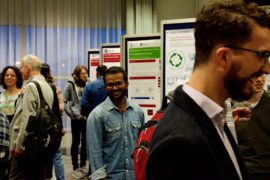
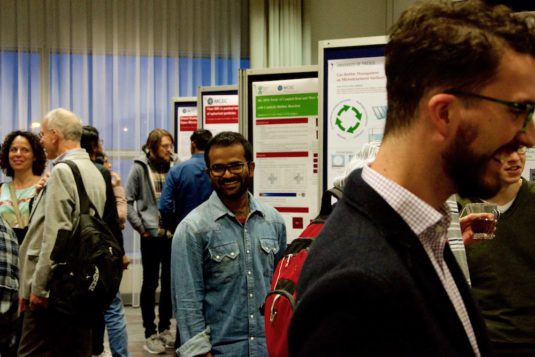
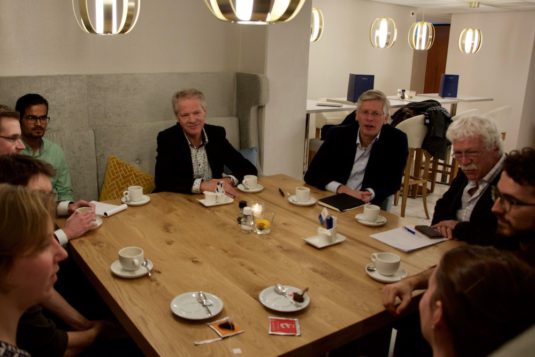
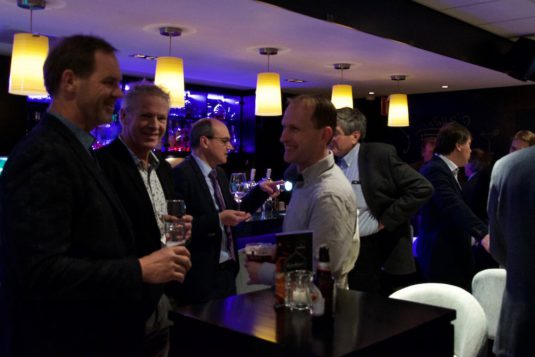
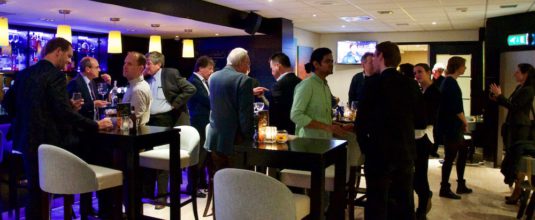
Below, you’ll find a photo impression of the Supervisory Board meeting with MCEC PhDs on Sunday, and the poster presentation and drinks on Monday.


MCEC researchers receive NWO funding to deploy computational and data science in sustainable energy research


DST and NWO are jointly funding four research projects in the area of computational sciences and data sciences in order to encourage the research collaboration between the Netherlands and India. MCEC researchers are main applicants in three (out of the four) awarded projects.
January 10, 2017

Dr. Laura Filion (Utrecht University) and Prof. Sudeep Punnathanam (Indian Institute of Science)
Design and Synthesis of Novel Catalysts for Energy Applications via Nanoparticle Self-Assembly

Prof. Detlef Lohse (University of Twente) and Prof. Meheboob Alam (Jawaharlal Nehru Centre for Advanced Scientific Research)
Dispersed multiphase flows in sustainable energy conversion processes

Prof. Marjolein Dijkstra (Utrecht University) and Prof. Srikanth Sastry (Jawaharlal Nehru Centre for Advanced Scientific Research)
Design of novel nanophotonic and plasmonic structures for improved solar cells using reverse engineering

Read more >

MCEC researchers selected for personal membership for ARC CBBC


The first 39 researchers have been selected for personal membership for the Advanced Research Center Chemical Building Block Consortium (ARC CBBC). Among them MCEC researchers: Alfons van Blaaderen, Pieter Bruijnincx, Marjolein Dijkstra, Frank de Groot, Krijn de Jong, Petra de Jongh, Bert Weckhuysen, Niels Deen, Emiel Hensen, Volker Hessel, Hans Kuipers and Detlef Lohse.

Read more >

January 13, 2017

“Feedback of fellow students is truly invaluable”


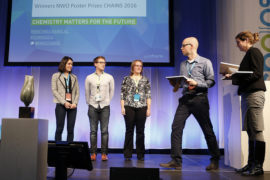
Bas Salzmann (second left) receives his Poster Prize at CHAINS 2016

Master student Bas Salzmann wins CHAINS Poster Prize

Bas Salzmann (1993) is a second-year master student Nanomaterials Science (formerly known as Nanomaterials: Chemistry and Physics). His supervisors are Robin Geitenbeek and Anne-Eva Nieuwelink.

“This CHAINS Poster Prize was an unexpected but welcome surprise. Of course, I put a lot of effort into my poster and talk, making sure that both experts and laymen would find the whole clear, orderly and appealing, but with 250 participants, one doesn’t really assume to win.

“I did notice however during the conference, that my efforts were already paying off: people complimented me on getting this far while yet being ‘only’ a master student, and I was aware of my own enthusiasm every time I spoke about the research. I remember thinking to myself: I’d wish I’d have another year to spend on this. That’s always a good sign, of course, but the interesting talks I had, and the reward in the form of the prize, really confirmed to me that I’m not only passionate for this research but also competent.

“What I like about the project I’ve been working on, is that it’s a combined project from Andries Meijerink’s Condensed Matter & Interfaces, and Bert Weckhuysen’s Inorganic Chemistry & Catalysis. I made use of the knowledge of both groups to synthesize my Y2O3:Ln3+ temperature nanoprobes and deposit them on α-Al2O3, a widely used support material in catalysis. First, the idea was to grow the temperature probes directly in another catalytic support, namely into the mesoporous silicate SBA-15, but with that the analysis turned out to be too intricate. The change to separate the synthesis and deposition of the temperature nanoprobes on α-Al2O3 and the usage of α-Al2O3 as support enabled us to actually characterize the system.

“The poster I presented at CHAINS explained how this system works. Beforehand I made sure to gain feedback on my drafts. I asked my supervisors, naturally, but also and especially my fellow students. Whether it’s for a poster or a presentation, like the one I’m practising now for my thesis presentation, I always benefit from their remarks and opinions since their input is truly invaluable.

“Soon, I’ll be off to Finland, where in February I will start a research internship in the field of Atomic Layer Deposition at the University of Helsinki. After that, I certainly hope that 2017 has a PhD in store for me.”


*Editor’s note: Bas held his presentation last Thursday 20 December.

Death and Life of Catalysts: Evgeny Pidko receives ERC Consolidator Grant


Dr. Evgeny Pidko (picture by Anton Litke)

Evgeny Pidko has been awarded the ERC Consolidator Grant for his proposal DeLiCAT: Death and Life of Catalysts. In this proposal, his research team will study the fundamental aspects of catalyst activity and deactivation for a number of chemical processes relevant to the fields of catalytic biomass conversion and hydrogen technology, using both state-of-the-art theoretical and experimental approaches.

Pidko: “Most of the ideas that I have are intrinsically stream-lined along the main goals of the MCEC program. Being embedded in its interdisciplinary environment offers a unique opportunity for me and for the new team to look at our research problems from a new directions, and, ultimately, come up with truly innovative solutions.”

Read more about Evgeny Pidko, his research and the ERC Consolidator Grant on the news page of TU/e and the website of NWO (in Dutch).

January 6, 2017

CHAINS Poster Prize for Bas Salzmann


Bas Salzmann at CHAINS

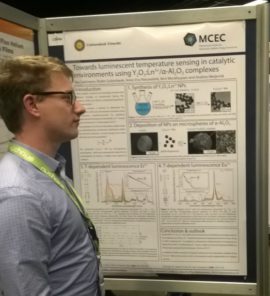
Bas Salzmann, Masterstudent Nanomaterials at Utrecht University who is supervised by Robin Geitenbeek, has won the CHAINS 2016 Poster Prize for his poster on ‘Towards luminescent temperature sensing in catalytic environments using Y2O3:Eu3+/Al2O3 complexes’; a project of Robin Geitenbeek and Anne-Eva Nieuwelink.

MCEC was represented at CHAINS 2016 with several members and PhD students who contributed to the event as chair or speaker, and three MCEC Posters.

A nice piece of information: Robin Geitenbeek happens to be the first winner of the MCEC Poster Prize, at the MCEC Annual Meeting 2016.

Read more on NWO site (Dutch) >

December 9, 2016

MCEC at CHAINS 2016


MCEC was represented at CHAINS 2016 (December 6, 7 and 8) together with the other Dutch Gravitation programs in the field of chemical sciences:

  • The Research Center for Functional Molecular Systems (FMS) aims to gain a deeper understanding of the molecular mechanisms, structures, and chemical processes that lead to living systems.
  • The Institute for Chemical Immunology (ICI) brings together Chemistry and Immunology in the new field of Chemical Immunology to diagnose and treat diseases related to immune system failure via new, targeted chemical compounds.

The following MCEC members and PhD students contributed to this event as chair or speaker at several sessions: Ivo Filot, Frank de Groot, Volker Hessel, Jan Philipp Hoffman, Arnout Imhof, Petra de Jongh, Florian Meirer, Celso de Mello Donega, Evgeny Pidko, Roderigh Rohling, Martin Sint-Anneland.

The following MCEC posters where presented:

Robin Broos (TU/e) The effect of surface termination on key reactions for Fischer-Tropsch reaction over iron-carbides

Vetrivel Shanmugam (TU/e) Effect of promotors on Ni/SBA-15 catalysts for steam reforming of poly alcohol in microreactors

Bas Salzmann (student of Robin Geitenbeek, UU) Towards luminescent temperature sensing in catalytic environments using Y203:Eu3+/AI203 complexes

Jochem Wijten wins Unilever Research Prize


Jochem Wijten was nominated for the prize because of his remarkable talent and passion for research. During his Master’s, he combined the expertise and technical infrastructure of Utrecht University and TU Eindhoven in a multidisciplinary context. With his research into alternative, carbon-free energy sources, he contributes to a more sustainable future in a major way.

December 1, 2016